Showing posts with label z-BAKING: The Pizza Grate. Show all posts

Monday, April 14, 2014

Review: The Pizza Grate

Making pizza at home can be a fun, if occasionally frustrating exercise. I'm not an accomplished baker - and so while I feel confident in choosing the right types and amounts of toppings, I've struggled to produce a crust that is better than that of even the most mundane corner pizza shop. And, with rare exception, the crust is the key to pizza success.

Home pizza makers face one built-in disadvantage - the oven typically gets no hotter than 500 or 550 degrees. Commercial pizza ovens begin at 600 degrees (gas types) and go up to 900 degrees or higher, allowing some pies to cook in 90 seconds. This high heat allows for all kinds of magic to take place both in the crust and in how the toppings meld to the crust.

Another hurdle is the cooking surface. Commercial ovens have a baking surface that is already hot when the pie goes into the oven. Home pie makers typically make their pies in round or rectangular pans which are room temp before entering the oven, or they use a pizza stone.
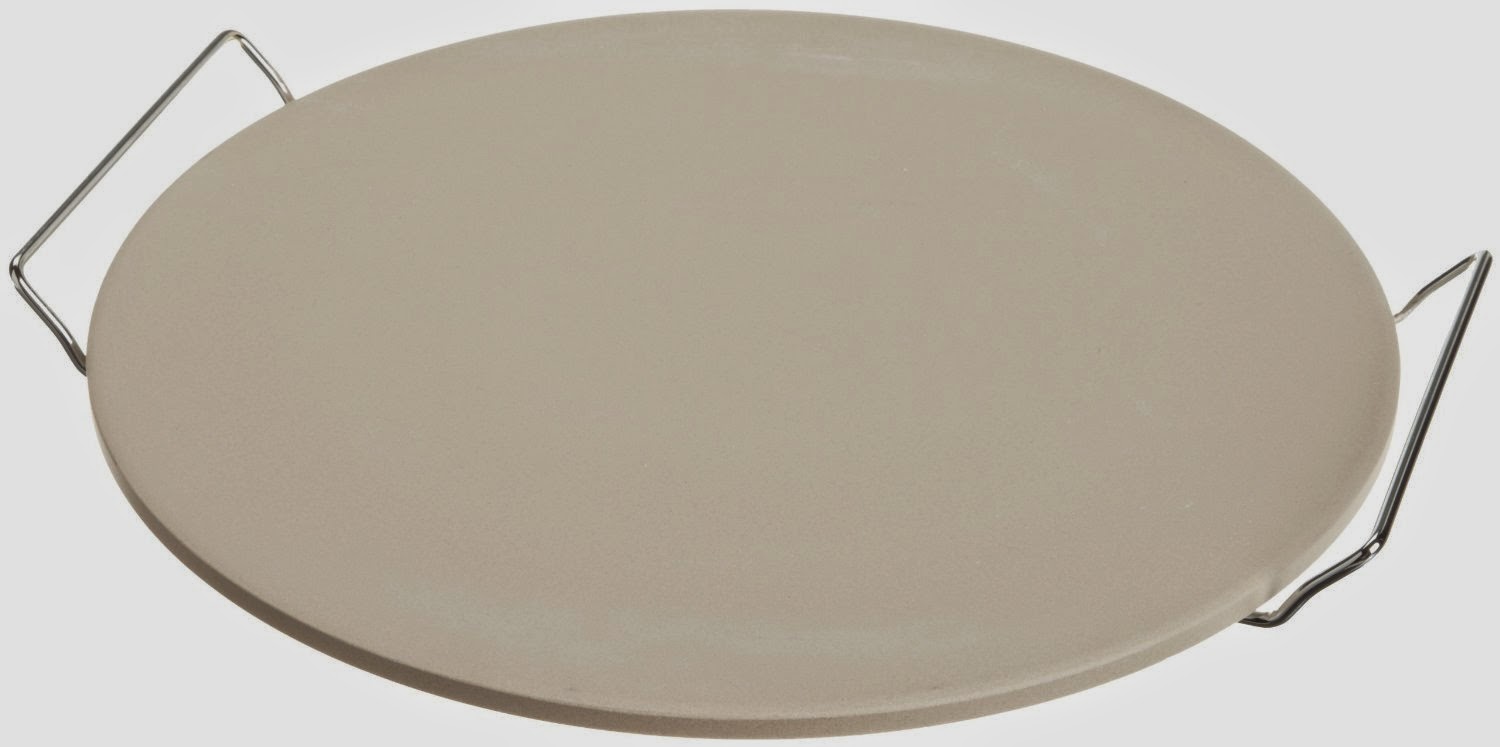
Pizza Stone

The pizza stone is a great advance. You can put it in your oven, let it pre-heat as your baking surface, and then insert the pie. The stone is sufficiently porous that excess moisture can escape. However, the stone is often the same size as your pizza, so it requires a lot of dexterity to get your pizza onto the hot stone for cooking.  Some folks just put the pizza - in a pan - onto the stone. Others have had success with swapping quarry tiles for the stone, using up to four 12" square tiles to get a big 2 feet by 2 feet baking surface.
 
From www.seriouseats.com
Not long ago, I discovered the "Baking Steel" - a quarter-inch thick slab of rectangular steel. It cost me $72, but once it is pre-heated for an hour, you get a hot cooking surface that comes pretty close to that of a commercial gas oven. It is heavy, difficult to clean, clumsy to store - but it produces wonderful pizza crusts. See my full review HERE. It is a clear upgrade over the pizza stone, and it allows easier transfer from your pizza peel to the baking surface.

Then, a few months ago, I saw a Kickstarter campaign for the "Pizza Grate." Like the Baking Steel, the designer sought to craft an optimal surface for baking pizza at home. He tested and found better results using aluminum over steel. He built prototypes with large ventilation holes, to allow excess moisture to escape. It is big - about the full size of an oven rack - and it has a backstop to prevent you from sliding your pie off the rear edge. It is lightweight and easy to handle, but it is clumsy to store (due to its size) and difficult to clean.  The key question is - how are the pies baked on the Pizza Grate?

My first attempt produced a very tasty pie, but I did burn the bottom (not quite to the point of inedible) even though the top was cooked about perfectly. I concluded that, because the aluminum conducts heat to the crust faster than does the steel, I needed to raise my oven rack higher to get a better balance of top cooking (my gas oven goes to 550 degrees).
My pie from Roberta's in Brooklyn

On my third attempt, I made several adjustments. I did move the rack higher, and I followed a crust recipe as closely as I could. I used the recipe from Roberta's in Brooklyn (a hipster restaurant which I have visited and reviewed HERE). You can find the recipe in the New York Times HERE. I made the dough on a Saturday, refrigerated it for 24 hours, then let it warm to room temp for about an hour before making the pies.

I used 50% Italian imported "00" flour and 50% conventional all-purpose flour, with a little salt and olive oil; I resisted the urge to stray from the recipe by adding some sugar as I otherwise might do.
Red wine was not an ingredient; but still vital to success

The recipe was enough for two 12" personal pies, and for the first time in my pie-making experience, I did not use a rolling pin to expand the diameter of the crust.  I actually "hand-tossed" the pie (not airborne), stretching it only with my thumbs and gravity. I did a clumsy job, but they both came out in rough 12" rounds, albeit with uneven thicknesses.


I followed my norm for the sauce - a simple can of diced tomatoes (from ALDI), drained, and then hand-crushed.  I added some fresh garlic and dried basil and a bit of olive oil. I never cook the sauce before it goes on the pie. The one standard can of tomatoes was enough for both 12" rounds.


Roberta's Neapolitan pie calls for fresh mozzarella cheese, but I opted for the cheese on hand in my fridge. I grated a combo of about 2/3 Dubliner (Irish cheese) and 1/3 Grana Padano. The cheddar-like Dubliner supplied the requisite creaminess, and the Grana Padano added a pungent tang. I've learned that the key to successful pies is to go lightly with all toppings.


Finally, I had some Chianti-infused cured salami (also from ALDI), which I cut as thinly as possible for a topping better than pepperoni. It was essentially a sweet soppressata. As a rookie dough handler, I used lots of flour on my hands, the prep surface, and the peel. The resulting pies had that telltale white dusting. I've always regarded that a sign of artisanal baking, but some family members wish I could make crust without the unmoistened external flour.
My Roberta's-recipe pie, cooked on the Baking Grate

Results? After about 7 minutes, I checked the underside of the pies. Cooking, but not at all burnt. I then turned off the baking setting and switched to broil (high) for two minutes more to watch the cheese bubble and the salami become crisp on the edges.

The pies came out with more hole structure and puffiness than anything I've made.  Texture-wise, it was ideally like a puffy Neapolitan that is somehow crisp and a little rigid underneath, exactly as I would hope.  Due to the uneven thickness, some parts were more doughy than ideal. But on balance, this crust was better than about half of the Neapolitan pies I've had, and there was no soupy wet center.

The sauce was close to perfect, but not quite the magic I recently experienced at Vetri and Bufad in Philly (review of Vetri HERE, and Bufad HERE). The cheeses were fine, but the Dubliner may have been a bit too bland. I've really enjoyed tallegio on pies lately, and need to get some. The salami added the perfect salty, meaty, smoky edge - but hot soppressata might have been even better.
Tallegio cheese

The Pizza Grate has taken on some major stains after just three uses. The creator suggests cleaning with steel wool or in the oven on the "clean" setting, but I may just regard this added color as seasoning.

Gorgeous undercarriage

This is the best pizza I've made at home. Certainly much of the credit goes to the Roberta's recipe and a little goes to my slowly improving pizzaolo craft. But without question, the Pizza Grate is a wonderful tool for the home pizza chef. 
"Seasoned" Pizza Grate - after I cleaned it

Which is better - the Baking Steel or the Pizza Grate? I think I need to bake and eat a lot more pies before I can say. For me, both are clearly superior to a pizza stone. If you are a home pizza maker, I recommend you get one or both.


Disclosure: Several months back, I did THIS interview with inventor John Daniels. Although the Kickstarter campaign did not reach its goal, he proceeded to build some prototypes and sent one to me for my analysis. In other words, I paid $72 for my Baking Steel, but got the Pizza Grate without charge. Still, I wouldn't recommend either if I did not have success with them.  

Sunday, November 17, 2013

The Pizza Grate for Home-Made Pizza: An Interview with John Daniels

An interest in eating the best pizza can lead to an interest in making great pizza. Most of us have plenty of failures with home-made pizzas. Mine began with the awful pizza kits from Chef Boy-Ar-Dee, before there was Elio's frozen squares.

We've come a long way, and the Internet makes it easy to research recipes, techniques, ingredients, and tools for great home-cooked pie. I discovered first the utility of the pizza stone, and then the Pizza Steel, a thick steel plate that has yielded wonderful crisp crusts. I tested it out and reviewed it HERE.

I love that device, but it has drawbacks. Because it is small and flat, it's easy for a clumsy-handed peel handler like to leave part of the pie hanging off the edge of the cooking surface. It is very heavy, and will rust if not dried carefully after washing.

Now, however, comes the "Pizza Grate." It has a backstop on one edge to keep the pie from sliding off, it has ventilation holes, its (optional) larger size covers an entire oven rack, and instead of steel, it's made of lightweight aluminum.
Click on any pic for full size resolution

We had a conversation with John Daniels of Daniele Appliance, who is using Kickstarter to fund development of the Pizza Grate. He shared with us the details on the Pizza Grate project and some other tips for home piemakers.

PQ: Tell us about your interest in home-made pizza. Are you a pizza chef? Is pizza making a hobby, or have you made pizza commercially?

JD: I am trained as an engineer and my day job is as a patent attorney. I have only made pizzas in our home oven or on the grill, and it used to be a disappointing, doughy-in-the-middle prospect. Since starting the Pizza Grate project, I have become addicted to pizza making. I think about it probably more than I should. We have pizza two or three times a week. I can’t wait to finish this interview so I can go make a pizza for lunch.


PQ: What led you to the idea of the Pizza Grate? What problem were you trying to solve?  Is this a hobby that took off, or were you looking to fill a market void? Tell us about your company.

JD: I came across a Kickstarter project for a steel pizza “stone” inspired by an article in Modernist Cuisine. The concept of cooking pizza on a preheated metal thermal mass makes a lot of sense. We have a CNC plasma cutter in our workshop, and built a few prototypes using 1/4” steel plate and 1/4” aluminum plate. Then we did head to head testing and concluded aluminum had a better overall performance. 

The breakthrough happened when we cut a pattern of through-holes into the aluminum plate. The through-holes let steam escape from under the dough as it cooks, instead of forcing the moisture up into the body of the pizza, performing the function of a good, porous pizza stone. We also added a backstop that prevents overshooting the launch of the pizza into the oven, and keeps the pizza from being pushed into the back wall of the oven when sliding the peel back under. 
 
Pork carnitas
The through-holes also unlock a lot of additional culinary dimension made possible by the thermal mass of a preheated Pizza Grate. It is awesome for making seared/broiled steaks and burgers, and I don’t think I’ll ever cook a chicken in the oven again without using the Pizza Grate, the skin becomes crispy all the way around. Last weekend I made pork carnitas from a whole pork shoulder. The through-holes let the fat and drippings drain away so the skin gets ultra crisp and crunchy, and the drippings can then be separated from the fat and added back to the moisten the pulled meat. We plan on cooking our Thanksgiving turkey this year on the Pizza Grate.


Aluminum is lightweight and of course, it doesn't rust like steel. But most important, aluminum is about 3 times as thermally conductive as steel and many times more thermally conductive than stone. That means it will absorb the heat energy in the oven quicker, and it will also give up the stored heat energy to the dough quicker.  

There are two keys aspects to our Pizza Grate: 
1) the through-holes allow steam to escape from the dough unrestrained so the moisture isn’t forced back into the dough towards the cheese side; and, 
2) the aluminum quickly gives up the heat energy to the raw dough at the beginning of baking through thermal conduction (direct metal to dough contact). 

The heat of the oven is reabsorbed by the aluminum mass by relatively slower thermal convection, creating a sort of shock absorber to the pizza cooking process giving the top of the pie time to get perfectly cooked.  It is very difficult to burn the bottom of the pizza, and the crust comes out beautiful every time. 

I started a company with a couple of friends to develop an outdoor cooking grill we created called the Incredigrill. The Pizza Grate came along during the course of our product development and is much less challenging to manufacture, so we have put our focus on this product to generate cash flow while development of the Incredigrill continues.

PQ: How do you distinguish great pizza from ordinary pizza?

JD: The crust, I think it is texture first and flavor second. It has to have a nice crisp outer shell, be light and airing on the inside, and there needs to be a nice chewiness too. Flavor is actually more subtle than texture, but when the dough has a good flavor to it, you know it.

PQ: Where did you grow up? What are your earliest pizza memories?

JD: I grew up in Trumbull, CT. Pizza was always a treat in our house growing up. I remember when he brought pizza home, my father would rip the top of the pizza box off serving the pizza in a nice flat serving “platter” in the bottom of the box. There were six kids and my parents, so when food hit the table it tended to disappear quick, I don’t remember there ever being any left over pizza.

PQ: Do you have a preferred style of pizza? Roman, Neapolitan, New York, New Haven, Sicilian, etc?

JD: I love them all, but my favorite is New Haven style pizza.

PQ: Can you name your favorite 2 or 3 pizza places today? What makes them special?

JD: Modern Pizza (note: PQ review HERE) in New Haven makes a really nice, simple, perfectly executed, pie.  I think its takes about two minutes for them to cook a pizza in their super hot ovens. The crust is perfect, and lots of mozzarella cheese. I don’t know if its the cheese they use or the cooking process, but the cheese takes on a really nice consistency that I can only describe as sort of mosaic looking. 
 
Meatball and onion pie at Modern
Just last week I had one of the best pizzas of my life at a pizzeria in NYC called Donatella’s. There is a massive wood burning oven in the back corner of the restaurant.

But, really my favorite pizza place these days is our home. There are few things in life to me that are as enjoyable, relaxing and satisfying as cooking with my children, and pizza is really the perfect vehicle for that experience.

PQ: Beyond your Pizza Grate, what tips do you have for home pizza makers?

JD: Number One, get the oven hot!

When flattening out the dough, work the outer rim first and work your way towards the center, you will get a nice even thickness this way.

Have all of your ingredients out and ready to add as you build your pizza, work fast so the dough doesn’t get stuck to the peel or work surface, and don’t overload the pie.   

Add a dash of vinegar to your pizza sauce, and use less sauce than you think you should, practice restraint.

I like to build the pizza on a layer of cornmeal on a wooden work surface and then slide a floured metal pizza peel under the pie immediately after putting on the final topping. Keep the pizza sliding on the peel by shaking the peel back and fourth as you walk it over to the oven, don’t give the dough a chance to stick.

Spin the pie once or twice during the cooking process so it cooks evenly.

Cook it a little bit past the point when you think its done.  You really want a little bit of char at the edges.

PQ: How easy, or difficult, is it to clean the Pizza Grate? Can it go in a dishwasher?

JD: The Pizza Grate can go in the dishwasher, its pretty much indestructible. It is very easy to scrub clean in the sink with a steel wool pad. If you want it looking like new again, put it in during an oven self-cleaning cycle.

PQ: Any other advice for those seeking great pizza, either at home or at a pizzeria?

JD: Treat yourself to a weekend day with nothing to do but making pizza. Make the dough the night before or in the morning following a good recipe exactly. When the dough is ready, get a can of crushed tomatoes and make a raw sauce by adding vinegar, oregano, garlic powder, salt and pepper directly into the can.  Get a block of mozzarella cheese and cut it into 1/2” slices that your can tear into pieces when making the pie. Get all your ingredients together, what ever toppings your want (but at least have fresh basil and pepperoni slices on hand), crack open a beer or pour a glass of wine and make a bunch of pizzas one after the other. Make the first pie simple and sparse as a warm up, just a bit of sauce and some cheese pieces, and go from there. Some concentrated pizza making time will hone your skills very quickly.

The Pizza Grate on Kickstarter: